Vocab test
- Disfrutar – To enjoy
- Vivir – To live
- Aprender – To learn
- Querer – To want
- Leer – To read
- Comer – To eat
- Caminar – To walk
- Hacer – To do/ to make
- A veces – Sometimes
- Todos los días – Every day
Verb of the day
Conjugate the verb HACER (to do/ to make) in the present tense.
| Yo | Nosotros |
| Tú | Vosotros |
| Él/ Ella/ Usted | Ellos/ Ellas/ Ustedes |
Questions to answer
1. ¿Qué haces?
2. ¿Ustedes comen carne?
3. ¿Tú bebes jugo de naranja?
4. ¿Aprendes mucho en la escuela?
5. ¿Lees muchos libros en español?
6. ¿Comes en la playa a veces?
7. ¿Escribes cartas para la abuela?
8. ¿Quieres abrir un restaurante?
A simple dialogue
Use the Spanish phrases to translate the English dialogue. Write it out and perform it.
- I want to eat at the beach today.
- That is a good idea.
- What do you want to do?
- I need to study. I have an exam on Monday. I need to read a lot!
- Do you have free time next week?
- Yes. My last exam is on Tuesday.
- Where are you now?
- I am in the library.
- Do you want to eat at the Mexican restaurant with me this evening?
- Well, I need to eat! Yes, please!
- I enjoy eating with you.
- Next week, after my exams, we can enjoy a fun party.
Use these phrases to translate the dialogue.
¡Bueno, necesito comer! Sí, por favor.
¿Dónde estás ahora?
¿Qué quieres hacer tú?
¿Quieres cenar en el restaurante mexicano conmigo esta noche?
¿Tienes tiempo libre la semana que viene?
En la biblioteca.
Es una buena idea.
Hoy quiero comer en la playa.
La semana que viene, después de mis exámenes, podemos disfrutar de una fiesta divertida.
Disfruto comer contigo.
Sí. Mi último examen es el martes.
Tengo que estudiar. Tengo un examen el lunes. Necesito leer mucho.
Choose from a range of voices to read your dialogue here.
Grammar notes
* Read this information, then use it to quiz a friend.
REGULAR SPANISH VERBS IN THE PRESENT TENSE
In Spanish, verbs are categorized into three main groups based on their infinitive endings:
- -AR verbs, e.g., hablar = to speak
- -ER verbs, e.g., comer = to eat
- -IR verbs, e.g., vivir = to live
For regular verbs, the conjugation follows one of three consistent patterns. The infinitive ending (-ar, -er, -ir) is removed, and the ending that matches the subject is added.
- -AR VERBS
| Subject | Ending | Example: hablar (to speak) |
| yo | -o | hablo (I speak) |
| tú | -as | hablas (you speak) |
| él/ella/usted | -a | habla (he/she/you speak) |
| nosotros/as | -amos | hablamos (we speak) |
| vosotros/as | -áis | habláis (you all speak – Spain) |
| ellos/ellas/ustedes | -an | hablan (they/you all speak) |
- -ER VERBS
| Subject | Ending | Example: comer (to eat) |
| yo | -o | como (I eat) |
| tú | -es | comes (you eat) |
| él/ella/usted | -e | come (he/she/you formal eat) |
| nosotros/as | -emos | comemos (we eat) |
| vosotros/as | -éis | coméis (you all eat – Spain) |
| ellos/ellas/ustedes | -en | comen (they/you all eat) |
- -IR VERBS
| Subject | Ending | Example: vivir (to live) |
| yo | -o | vivo (I live) |
| tú | -es | vives (you live) |
| él/ella/usted | -e | vive (he/she/you formal live) |
| nosotros/as | -imos | vivimos (we live) |
| vosotros/as | -ís | vivís (you all live – Spain) |
| ellos/ellas/ustedes | -en | viven (they/you all live) |
Journal prompts
Write short sentences. Keep them as simple as you can.
Use a translation tool to put them into Spanish.
Write them out, then check them with your teacher. Present them to a friend, teaching your friend any new Spanish, and making sure they learn it!
| When do you have free time this week? What do you like to do in your free time: when you have no money?when the weather is good?when money is no problem?when your friends are all busy? | ¿Cuándo tienes tiempo libre esta semana? ¿Qué te gusta hacer en tu tiempo libre: cuando no tienes dinero?cuando hace buen tiempo?cuando el dinero no es un problema?cuando tus amigos están todos ocupados? |
Next lesson: 2.14 Describe activities
Buy the workbook in print!
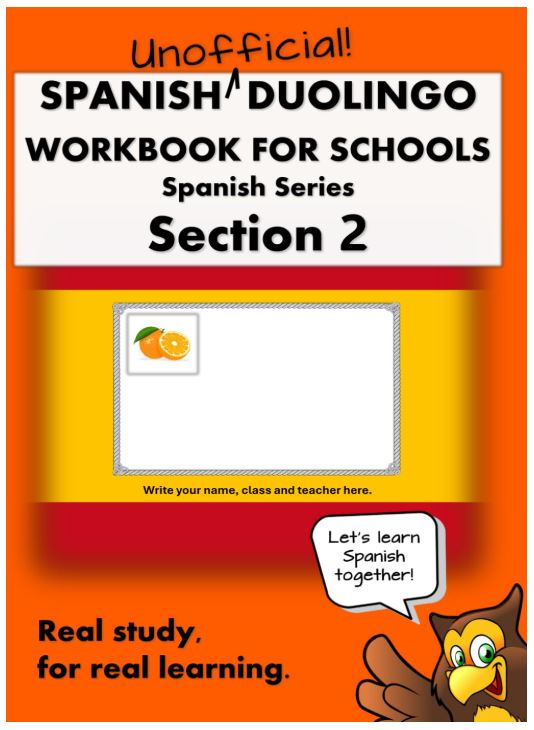
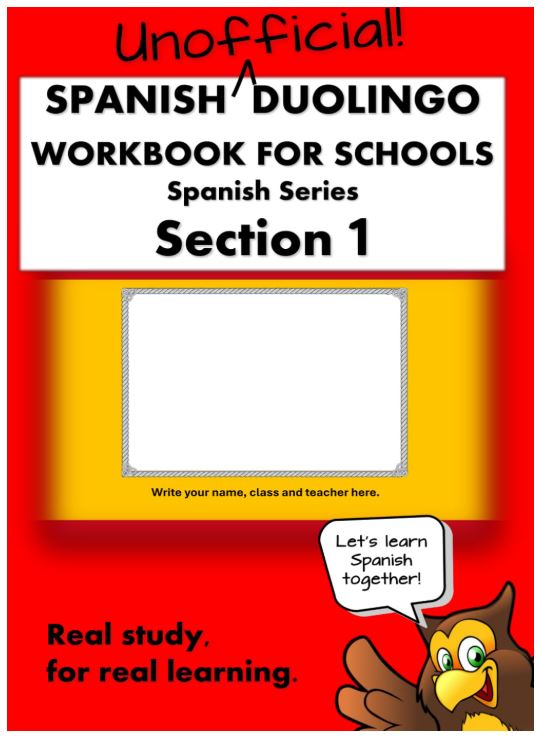
Key features
- Photocopiable habit tracker
- List of vocabulary items to learn for each unit
- Space to note Duolingo phrases
- A conjugated verb for each unit
- Duolingo inspired questions to answer with the help of AI
- A simple on-theme dialogue for each unit
- Grammar explanations for each unit
- Suggested websites for further study
- Fully backed up with a YouTube lesson for each chapter, presented by the author
- Journal prompts to encourage the Spanish journaling habit
- Teaching notes and ideas
 DuoBookClub.com